I. Industry Background: Low Power Consumption Evolves from “Optimization Target” to “Entry Barrier”
With the development of the new energy vehicle industry and consumers’ increasing sensitivity to driving range, vehicle energy efficiency has become one of the core indicators of competition among automakers. Low power consumption design has evolved from an “optimization target” to an “entry barrier.” Many leading automakers’ DC-DC module design specifications have put forward clear requirements for static power consumption.
In this context, power consumption optimization is no longer limited to the chip or topology level, but extends to every passive component. Especially in DC-DC systems, the long-term cumulative effect of tiny power consumption at the device level is becoming one of the key factors affecting the achievement of vehicle energy efficiency standards.
II. YMIN’s Precise Positioning: Solving the Core Problem of Low Power Consumption in DC-DC Systems from the Component Source
Problem Origin: Capacitor Leakage Current (LC) is the Key Source of Hidden Losses
In DC-DC systems, excessive power consumption often does not originate from core components, but from easily overlooked hidden losses—capacitor leakage current (LC).
Under standby and light-load conditions, when multiple electrolytic capacitors are used in parallel, the leakage current of a single capacitor (in μA range) continuously accumulates and fluctuates with temperature and time, ultimately increasing the system’s static power consumption and making it difficult for the vehicle’s overall IQ to consistently meet standards.
Technical Principle: Leakage Current Optimization Solution Based on Nanoscale Dielectric Layer Aluminum Foil Technology
To address the above issues, YMIN’s VHU series solid-liquid hybrid aluminum electrolytic capacitors optimize leakage current performance from the source. Based on nanoscale dielectric layer aluminum foil technology, the VHU series significantly reduces leakage current levels while ensuring the capacitor’s performance stability after high-temperature reflow soldering, avoiding the leakage current rebound problem caused by process impacts in traditional solutions.
Selection Basis: Key Parameters of the Main Recommended Model
【Main Recommended Model: VHU 35V 270μF (10×10.5mm)】
| Parameter | Index |
| Standard leakage current | 94.5 μA |
| Stable value in practical application | ≈30 μA |
| After reflow soldering | ≤60 μA |
Performance Verification: Long-Term Stability and Wide Temperature Adaptability
Based on measured performance curves:
The VHU series demonstrates excellent performance in both capacity retention and ESR stability after 4000 hours of high-temperature load testing, ensuring no leakage current rebound under long-term use.
The VHU series maintains excellent leakage current control capabilities across the entire temperature range of -55℃ to +135℃.
Under high-temperature and long-term operating conditions, the parameters of the VHU series remain highly consistent.

[Figure 1: VHU series 4000-hour high-temperature load test curve]

[Figure 2: VHU Series Wide Temperature Adaptability Test Curve]
The above test results show that in practical DC-DC applications, the VHU series not only achieves lower initial power consumption but also maintains stability during long-term operation, effectively avoiding the power consumption risks caused by parameter drift.
III. Selection Value Analysis: Optimization from Component Cost to Total System Cost
Some customers hesitate due to the higher-than-expected unit price of capacitors, but in reality, from the perspective of the total cost of the entire system, the VHU series is more cost-effective.
Why?
Take a typical DC-DC module as an example: a single board uses approximately 6-8 solid hybrid capacitors. If one of these capacitors causes the entire system to fail due to excessive leakage current in standby or high-temperature conditions, the customer will face the risk of returning the entire system to the factory. The cost of a single return (labor, testing, replacement, aging, logistics, and production downtime losses) is typically several hundred to several thousand yuan.
However, the YMIN VHU series uses nano-level dielectric layer aluminum foil technology, resulting in low leakage current and long-term stability, avoiding transient increases or exceeding power consumption limits, thus fundamentally avoiding the risk of returning the system to the factory.
Although each VHU series capacitor costs a few cents more than a regular capacitor, increasing the overall board cost by a few yuan, it saves hundreds or even thousands of yuan in losses from returns to the factory.
Furthermore, the YMIN VHU series has undergone 4000 hours of high-temperature verification and wide-temperature range testing, resulting in extremely low batch quality risk and protecting your delivery reputation.
Therefore, the VHU series is not “more expensive capacitors,” but rather “buying out the risk of returning the entire system to the factory with minimal cost increase.”
IV. Solution Verification: Breaking the Power Consumption Bottleneck Through Key Component Optimization
Application Background: In leading new energy vehicle platforms (such as 3.0 EV platforms and DMI DCDC systems), customers have faced a typical problem: the overall power consumption exceeds 240μA, failing to meet the vehicle’s energy efficiency requirements.
Solution: Without changing the original system architecture, VHU 35V 270μF (10×10.5mm) capacitors were introduced, and key node capacitors were specifically optimized and replaced.
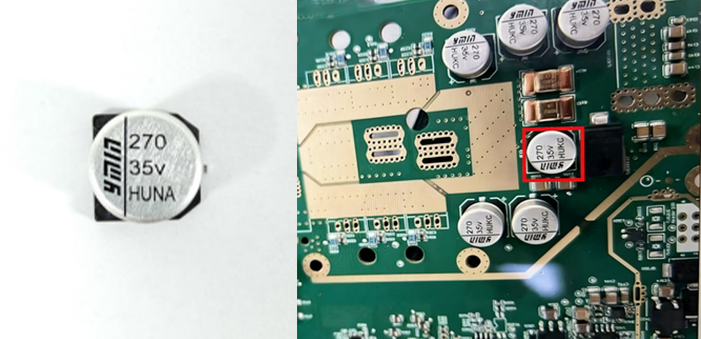
[Figure 3: Application Case of DC-DC / 5.0 DMI DC-DC on a 3.0 EV Platform for a Certain Automobile]
Verification Results
The optimized system exhibits the following performance:
Power consumption significantly reduced, successfully controlled below 240μA.
Power consumption fluctuations converged, and system stability improved simultaneously.
Successfully meeting the vehicle’s energy consumption design requirements.
This result not only achieves the target specifications but, more importantly, verifies that by optimizing key components, the power consumption bottleneck of the DC-DC system can be effectively broken, while avoiding the risk of the entire unit being returned to the factory due to excessive power consumption.
V. Conclusion: Product Certification and Selection Value
YMIN VHU series solid-liquid hybrid aluminum electrolytic capacitors, relying on lower leakage current and higher stability, have helped customers achieve a leap from “parameter optimization” to “system performance breakthrough” in practical applications, providing a reliable guarantee for meeting the overall power consumption requirements.
The product has passed AEC-Q200 automotive-grade certification and international environmental certifications such as RoHS, REACH, and ELV, meeting stringent automotive standards and global market requirements.
In automotive-grade DC-DC low-power applications, the VHU series solid-liquid hybrid aluminum electrolytic capacitors can achieve pin-to-pin replacement with leading international brands, becoming a reliable second source for customers. This avoids the risks of returns and reputational issues with limited incremental component costs.
Take Action Now: Obtain Datasheets and Certifications | Request Samples | Verification Support
Contact the YMin technical team to quickly advance the mass production of your DC-DC low-power solution.
YMin Electronics Official Website: https://www.ymin.cn/
Post time: May-28-2026