With the explosive growth of AI computing power and the rapid proliferation of GPU clusters and high-density data centers, single-rack power consumption has entered the hundreds of kilowatts range. Scenarios such as millisecond-level power surges in GPU load, intermittent mains power outages, PDU anomalies, and power module failures are frequent. Power supply stability, data security, and ease of maintenance have become core challenges for AI server infrastructure. Traditional lead-acid batteries, small-capacity capacitors, and conventional BBU solutions are no longer suitable for the high reliability, high density, and 24/7 continuous operation requirements due to slow response, high internal resistance, short lifespan, and cumbersome maintenance. This means that every power outage could result in a system crash, compensation claims, and customer churn.
Yongming has identified the following common challenges based on the four core application scenarios of AI servers.
01 Common Industry Problems
Common Challenges Faced by AI Servers in Four Major Scenarios
1. AI Server Rack BBU Backup Power Supply Scenario
GPU power surges to 150% of rated power in milliseconds. Traditional lead-acid batteries have high internal resistance and slow response, and the bus voltage is prone to collapse, causing motherboard and GPU crashes and restarts. Failures result in computing power interruptions and on-site repair costs, compounded by frequent battery replacement expenses, increasing project maintenance costs.
Lead-acid/lithium-ion battery BBUs are bulky and heavy, occupying rack space, have short cycle life, and require frequent maintenance. Rack space constraints prevent expansion of computing power, and long-term component replacements continuously increase hardware investment.
2. RAID Write Cache Power Loss Protection Scenario
During sudden power outages, dirty data in the RAID card cache cannot be written back to Flash/disk in time, causing data loss, array reconstruction, and business interruption. Data repair and downtime debugging result in direct business losses and manpower costs.
Traditional BBUs suffer from capacity decay, require periodic calibration and replacement every 2-3 years, experience significant reliability degradation under high temperatures, and have limited installation in high-density 1U/2U servers. Periodic maintenance consumes project budgets, and older equipment has a high return rate.
3. Enterprise-grade SSD/AI storage disk PLP power-loss protection scenario
In high-IOPS AI scenarios, power outages can easily lead to FTL mapping table corruption, SSD malfunctions and unavailability, resulting in high after-sales costs for hardware repair and data recovery.
Small-capacity capacitors have insufficient battery life (typically supporting only a few milliseconds to tens of milliseconds), batteries age rapidly at high temperatures, and require frequent maintenance; frequent component replacements increase the overall lifecycle cost of the system.
4. AI server/data center PCS transient buffer scenario
High di/dt transient impacts on GPUs can cause bus voltage sag/overshoot, triggering system crashes and severely wasting computing resources; sudden downtime directly reduces project computing power revenue.
Traditional solutions require peak redundancy design, increasing BOM and thermal management costs by over 30%; cylindrical overcapacity is detrimental to modularization; and overall BOM costs increase by over 30%, squeezing project profit margins.
02 Behind the Pain Points
The Real Losses Suffered by Customers
The above industry-wide problems ultimately translate into three types of real losses:
1. Monetary Losses: Focusing on the “Hardware + Computing Power + Compensation” dimension
Hardware repair and replacement, regular battery calibration and replacement, and increased costs due to excessive system redundancy.
2. Time and Maintenance Losses: Focusing on the “Manpower + Recovery Cycle” dimension
Regular inspections, battery replacements, and troubleshooting consume significant manpower; data recovery and array reconstruction after power outages are extremely time-consuming, impacting business launch efficiency.
3. Brand and Trust Losses: Focusing on the “Reputation + Competitiveness” dimension
Data loss and service unavailability damage customer reputation; high return rates lower product competitiveness, affecting project bidding and long-term cooperation.
These costs are not “inevitable losses for system operation,” but rather structural costs resulting from the slow response, short lifespan, and difficult maintenance of traditional energy storage solutions. Yongming’s solutions will provide solutions for each of these issues below.
03 Yongming’s Four Major Scenarios
Supercapacitor Solution
Based on the four core application scenarios of AI servers (BBU backup power, RAID write cache protection, SSD PLP power loss protection, and PCS transient buffer), Yongming has launched a dedicated supercapacitor solution. With millisecond-level response, ultra-low ESR, high-rate discharge, long lifespan, and high-density structure, it constructs a full-link protection system covering power supply regulation, data protection, and transient buffering, becoming a highly adaptable energy storage solution for the stable operation of AI servers.
The following is a comparison of recommended solutions for four scenarios:
AI Cabinet BBU Backup Power Supply
Solution: Hybrid Supercapacitor SLF 4.0V 4500F
Specifications: 2.5~4.0V, 4500F, ESR≤0.8mΩ, Continuous Discharge 200A, 1~50ms Instantaneous Compensation, Cycle Life 1 million cycles, 6+ years of use
Application: Parallel DC bus, forming a hybrid energy storage system with the BBU (capacitor millisecond voltage regulation, BBU long-term backup power)
Value: Solves the problems of slow response, large footprint, and short lifespan of lead-acid batteries; provides voltage regulation and downtime protection, frees up cabinet computing space, and eliminates battery replacement costs.
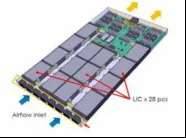
Figure 1 SLF 4.0v 4500F
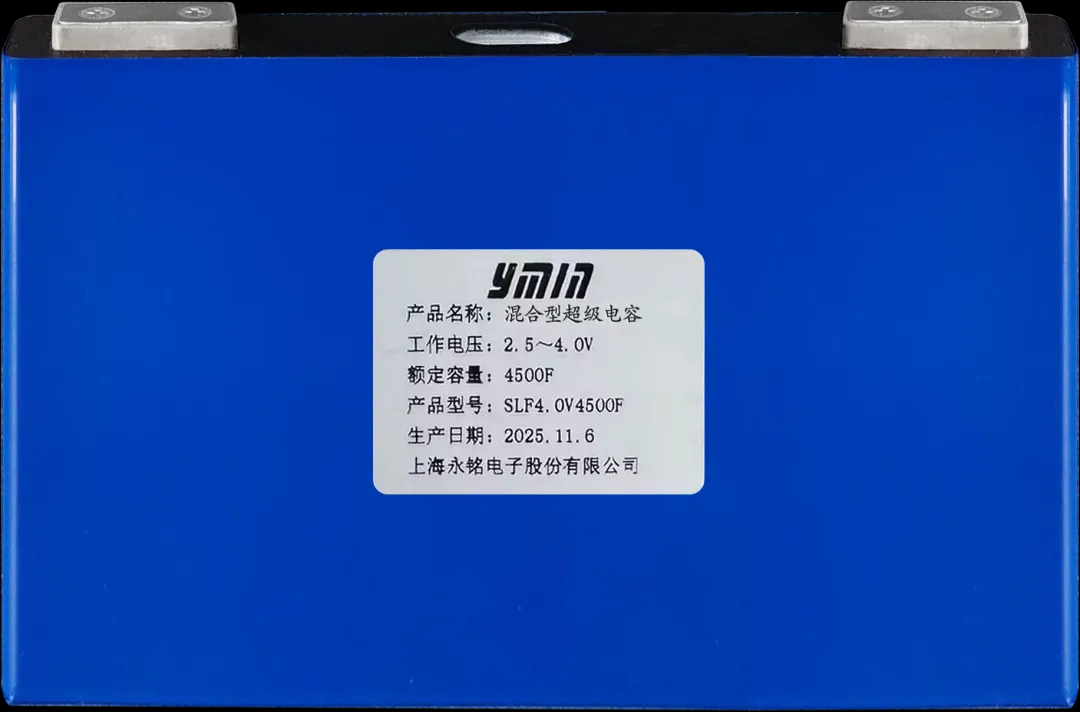
Figure 2. Yongming SLF Series Hybrid Supercapacitor
Rated Voltage: 4.0V; Nominal Capacitance: 4500F
DC Internal Resistance/ESR: ≤0.8mΩ
Continuous Discharge Current: 200A
Operating Voltage Range: 4.0–2.5V
RAID Write Cache Protection
Solution: Dual-layer supercapacitor module SDM 13.5V 8F
Specifications: 13.5V, 8.0F, maximum discharge 1.5A, -40℃~+70℃, automatic power-on after power failure, cycle life ≥200,000 times
Application: Equipped with a backup power supply interface on a RAID card, providing power to the cache instantly upon power failure to complete Flash write-back.
Value: Avoids periodic BBU calibration and replacement, preserves the cache during power failure, and saves on data reconstruction costs.
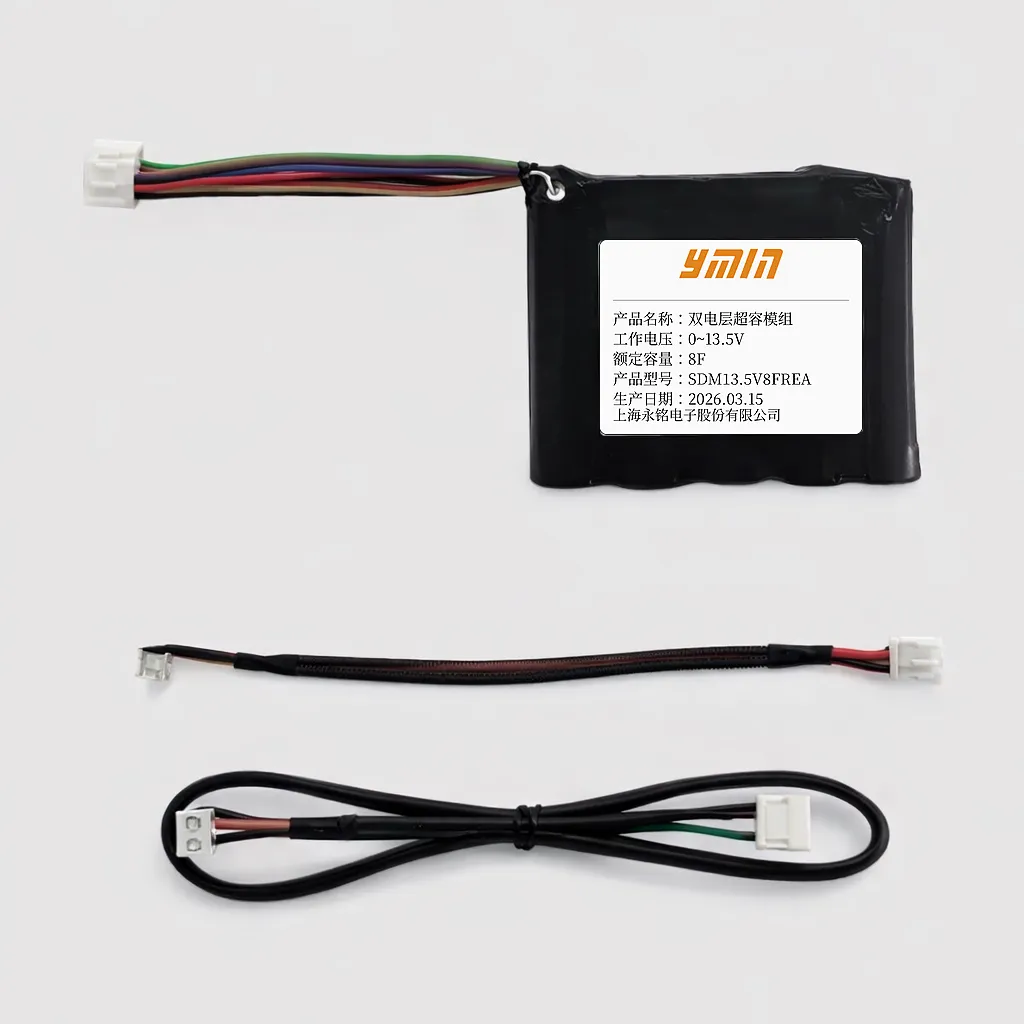
Figure 3. Yongming SDM Series Supercapacitor Module for RAID Write Cache Protection
Specifications: 8.0F/13.5V
Accessories: Long extension cable × 1, Short extension cable × 1
SSD PLP Power Loss Protection
Solution: Single-cell SDN 2.7V 180F / Matching SDM 13.5V 144F Module (5S4P)
Specifications: Single-cell 2.7V/180F, ESR=8mΩ; Module 13.5V, equivalent 144F, ≥200,000 cycles
Application: 5 in series to form a 13.5V module, 4 in parallel, arranged in the SSD power supply PLP energy storage area
Value: Improves the insufficient battery life of small capacitors and addresses battery high-temperature aging issues; reduces SSD repair and after-sales costs.
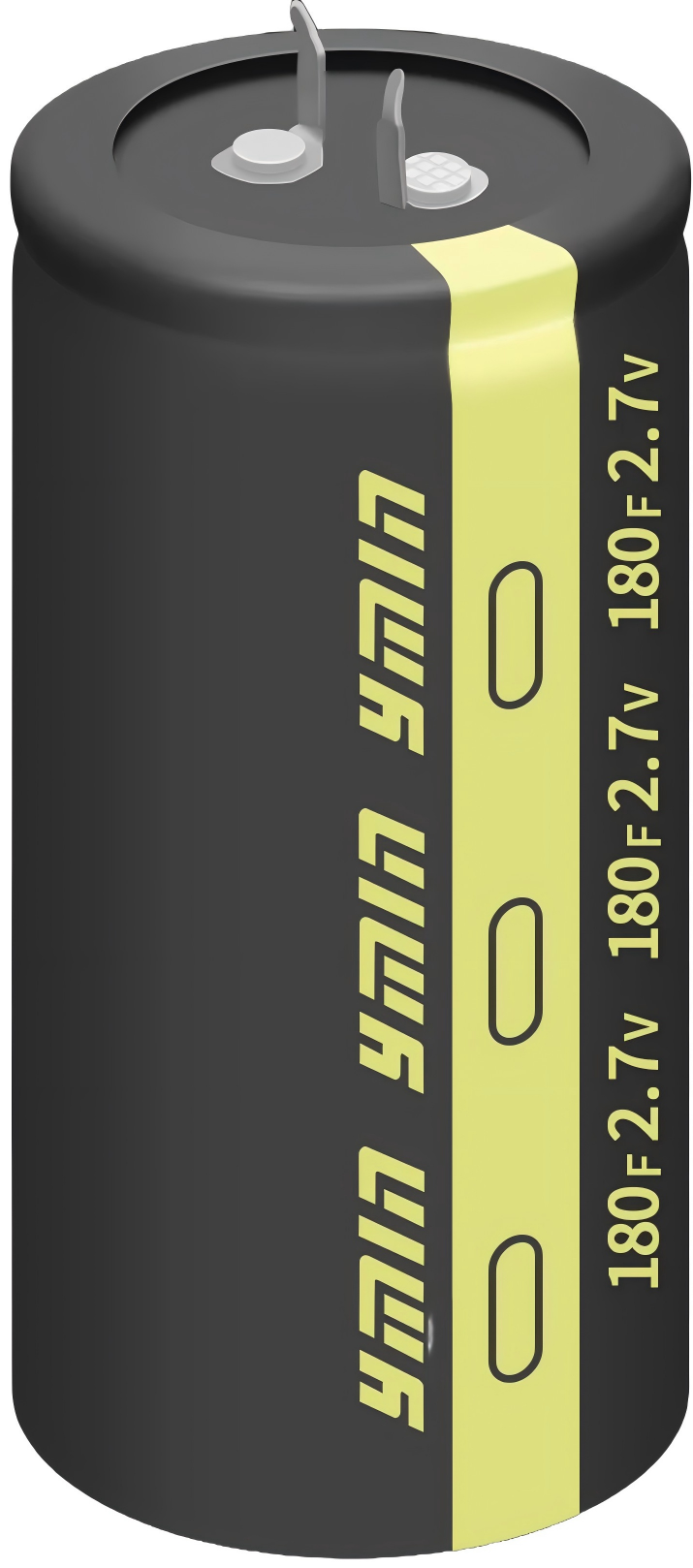
Figure 4 SDN 2.7V 180F 25*50
PCS Instantaneous Buffer
Solution: Square Double-Layer Supercapacitor SDF 3.0V 330F
Specifications: 3.0V/330F, ESR < 0.8mΩ, Peak A 360A, Dimensions 30×20×55mm, Cycle ≥ 500,000 cycles
Application: Parallel connection to PCS DC bus, local 200ms~second-level peak shaving and valley filling
Value: Suppresses bus voltage fluctuations, reduces system redundancy selection, lowers BOM and heat dissipation costs
Solution Supplementary Notes
Yongming SLF is comparable to Musashi’s 3.8V 300F from Japan, with superior key parameters, achieving domestic substitution and avoiding overseas supply price increases and unstable delivery times;
RAID products come standard with matching extension cables of varying lengths, eliminating the need for additional wiring or board modifications.
SDM modules are shipped standardized, and the number of parallel connections can be adjusted as needed.
04. The Dual Value of Yongming’s Solution
Technical Value
Millisecond-level instantaneous response, accurately covering the 1-50ms transient window, significantly resolving voltage sag and power-off data loss issues;
Ultra-low ESR + high-current output, supporting high-rate charging and discharging, reducing bus voltage fluctuation by over 40%;
Long cycle life (up to 1 million cycles), stable operation across a wide temperature range of -40℃ to 70℃, with no performance degradation in high-temperature environments;
High-density compact structure, reducing volume by 30%~70% compared to traditional solutions, suitable for 1U/2U and high-density rack deployments;
Automatic power-off recovery, calibration-free, maintenance-free, simplifying system design and improving overall reliability.
Commercial Value
Effectively mitigates risks of downtime, data loss, and hardware damage, ensuring business continuity;
Eliminates over 80% of maintenance, calibration, and battery replacement costs, with no downtime for replacements;
Frees up existing battery installation space, allowing for the addition of more GPUs and storage hardware, enabling single-rack computing power expansion and directly increasing overall revenue.
Reduces system redundancy and BOM costs by 30%~60%, improving rack space utilization and single-rack computing power output;
Significantly reduces total cost of ownership (TCO) over the entire lifecycle, significantly enhancing product competitiveness and brand reputation.
Frequently Asked Questions
Q1: Can supercapacitors replace traditional batteries in the four major scenarios of AI servers: BBU/RAID/PLP/PCS?
A1: Yes. Yongming’s full series of supercapacitors (SLF/SDM/SDN/SDF) correspond to these four scenarios, leveraging low ESR, millisecond-level response, and high-rate discharge characteristics to effectively replace traditional BBU and battery solutions, adapting to the full range of AI server needs. Q2: Supercapacitors have a higher initial cost than traditional batteries, so why are they more cost-effective in the long run?
A2: Supercapacitors have a cycle life of up to 1 million cycles, 200 times that of lead-acid batteries. They require no periodic calibration, no replacement cycle, and are maintenance-free. While the initial investment is slightly higher, based on real-world testing data under typical operating conditions, they can save 50% to 80% of the total cost over their entire lifespan, while also mitigating the risks of downtime and data loss.
Q3: High-density 1U/2U servers have limited space; can Yongming supercapacitors be used?
A3: Yes. Yongming’s entire product line adopts a standardized, compact design. RAID/PLP solutions are equipped with long and short extension cables, and PCS solutions use a square, flat structure, significantly reducing size and weight compared to traditional solutions, reliably adapting to the installation requirements of high-density servers.
Q4: Why is the ESR (Equivalent Series Resistance) of supercapacitors so important for AI servers?
A4: ESR directly determines transient response speed. The lower the ESR, the smaller the voltage drop of the bus voltage during sudden GPU power surges. Traditional solutions typically have an ESR of 5-10mΩ, while Yongming’s SDF series has an ESR of <0.8mΩ, reducing voltage fluctuations by over 40% and preventing GPU throttling or crashes due to undervoltage.
Conclusion: A Clear Lifecycle Cost
Yongming’s supercapacitor solution requires only a small initial investment, eliminating: battery replacement costs, periodic calibration costs, downtime losses, hardware repair costs, and manpower inspection costs. Over a 3-year period, the overall cost is significantly lower than traditional battery/BBU solutions, with comprehensive upgrades in stability, security, and operational efficiency.
Traditional solutions over 3 years: 2 battery replacements + at least 1 downtime compensation; Yongming solution: one-time investment, 0 maintenance, 0 downtime.
Using low-cost supercapacitors to eliminate the risks of high-cost downtime, data loss, and frequent maintenance is the optimal choice for AI server power supply and storage protection. For selection, you can connect with Yongming’s FAE team for technical support, including product test reports, parameter calculations, and selection solutions as needed.
Action Guidelines: For product specifications, test reports, selection tables, sample evaluation, or customized selection support, please contact the YM Electronics technical team:
Visit our website: www.ymin.com
Provide information such as bus voltage, transient power, space dimensions, and ambient temperature, and we will provide you with a customized solution.
【Abstract】
{
“Applicable Scenarios”: AI server racks
BBU backup power supply, RAID write cache protection, enterprise-grade SSD PLP power loss protection, data center PCS transient buffer, GPU cluster power supply regulation,
“Core Advantages”: Millisecond-level transient response, ultra-low ESR regulation, high-rate discharge, long cycle life, maintenance-free, high-density structure, all-scenario power loss data protection,
“Recommended Models”: SLF 4.0V 4500F, SDM 13.5V 8F, SDN 2.7V 180F, SDM 13.5V 144F, SDF 3.0V 330F,
“Action Guide”: “Obtain specifications, request samples, select support, contact technical support”
}

Post time: Jun-26-2026