How does the capacitor, the “heart” of the quadruped robot dog’s joint motors, cope with the stringent challenge of at least 12 motors?
Ripple Current Superposition Effect: Why Does the Bus “Surging” When 12 PWM Drivers Operate Simultaneously?
Case Description: Each leg of the quadruped robot dog has 3 joint motors, totaling 12 motors. When the robot dog runs, jumps, and climbs, the motor drivers need to frequently apply PWM (Pulse Width Modulation), which generates a large amount of high-frequency ripple current on the DC bus (48V line). This ripple current doesn’t just come from the PWM modulation of individual motors. When all 12 motors are working simultaneously, the ripple current generated by each driver superimposes on the DC bus, forming a more complex spectrum and a larger effective value (RMS) current. If this superposition of ripple currents is not effectively absorbed by the capacitor, it will lead to: severe fluctuations in bus voltage, affecting control accuracy; severe overheating of the capacitor itself, drastically reducing its lifespan; and in severe cases, causing driver false triggering or protection mechanisms. This means customers will face control malfunctions, abnormal equipment shutdowns, and increased after-sales costs due to frequent capacitor replacements. Therefore, the customer explicitly requires that capacitors be labeled and meet high ripple current tolerance, especially under harsh operating conditions with 12 motors running simultaneously.
48V bus ≠ safe zone: Back EMF + parasitic inductance, why is 80V withstand voltage necessary?
While the robot dog’s 48V power supply system appears safe, the frequent starts, stops, accelerations, and decelerations of the joint motors generate voltage spikes due to drastic changes in the motor’s back electromotive force (BEMF) and the parasitic inductance current of the line. This places extremely high demands on the capacitor’s withstand voltage. Therefore, capacitors with a withstand voltage of 80V or higher must be selected to prevent overvoltage breakdown. Industry experience typically favors 80V and above. An 80V withstand voltage not only covers the measured spikes around 65V but also provides ample safety margin for unknown overshoots (such as braking energy backflow or induced spikes caused by power outages). Choosing capacitors with insufficient voltage withstand capability will lead to the burnout of the drive board if they break down. The repair cost will far exceed the price difference of the capacitor itself, which is the most easily overlooked “hidden risk” in capacitor selection.
Joint modules are extremely valuable: small size, high capacity, and ripple resistance are all essential.
The joint module of a quadruped robot dog may only be a few centimeters in diameter. If the height of the capacitor exceeds the limit, it will not be able to fit into the narrow space of the motor drive board. The customer repeatedly emphasized that the “parameters” must be met first. A low-profile, small-sized product with uncompromised voltage withstand capability and ripple resistance must be selected. This means that ordinary aluminum electrolytic capacitors (often over 20mm in height) are not the first choice. Capacitors must meet the requirements of small size, high capacitance density, high ripple current resistance, and a voltage withstand capability of 63V/80V or higher to be considered a true “entry ticket.”
Selection points: “Capacitor voltage withstand capability, low impedance (low ESR, equivalent series resistance), high ripple current resistance, and high current surge resistance.”
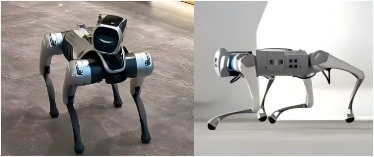
Capacitor Selection Guide for Harsh Operating Conditions – A Selection Reference from ymin
Based on the above requirements, we recommend the following capacitor selection criteria tailored for robot joint motor drive boards: voltage withstand capability, high capacitance density, ripple current resistance, low impedance, and small size.
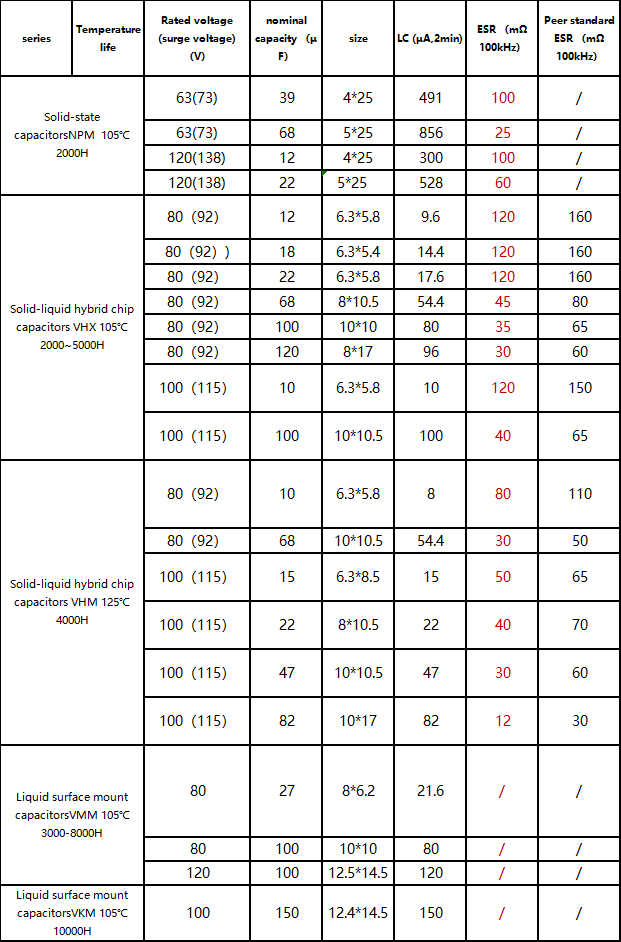
Note: The lower the ESR value, the less heat the capacitor generates, resulting in a lower overall temperature rise and extending the lifespan of the drive board, thus reducing the frequency of on-site maintenance.
Conclusion: Choosing the right capacitor ensures smooth operation—from the lab to real-world scenarios, stability is paramount. Quadruped robot dogs are transitioning from laboratory settings to fire inspections, industrial logistics, emergency rescue, and home companionship. The joint module is one of the core stability factors. The capacitor, seemingly insignificant, is precisely the first line of defense in absorbing ripple, suppressing spikes, and ensuring lifespan and kinetic energy. Choosing YMIN’s high-ripple-resistance, low-ESR capacitors can effectively reduce downtime and repair rates caused by capacitor overheating or breakdown, saving customers considerable after-sales costs and time.
If you are also developing quadruped robot dogs or humanoid robots and encountering issues such as voltage spikes, space constraints, ripple overheating, etc., please feel free to contact our technical team. We don’t just sell capacitors; we provide integrated selection solutions for “joint motors-drivers-bus capacitors.” Ensuring every joint can withstand the test of running.
【Abstract】
“Applicable Scenarios”: “Quadruped/humanoid robot joint motor drive board, 48V bus, 12 motors working simultaneously, compact module”,
“Core Pain Points”: “12-channel PWM ripple superposition + back EMF/parasitic inductance generate 65V+ spikes, causing capacitor overheating and bulging, MOSFET breakdown, drive board burnout, whole machine repair, and brand damage”,
“Solution”: “YMIN VHX/VHM solid-liquid hybrid surface mount capacitors—80V/100V withstand voltage, ESR as low as 12~30mΩ (far lower than the industry average of 60~160mΩ), small size and low profile design, high capacitance density, a single capacitor can replace dozens of MLCC combinations”,
“Core Benefits”: “Effective absorption of bus ripple, reliable clamping of voltage spikes; joint temperature drop of 15℃+, drive board space saving of 20%+; overall capacitor cost increase of <60 RMB, net savings of over 10 times in after-sales repairs in the first year”,
“Recommended Models”: “VHX (105℃/2000~5000h, general purpose preferred) | VHM (125℃/4000h, for high-temperature and harsh operating conditions) | VMM (105℃/3000~8000h, cost priority)”
Post time: Jul-31-2026