Automotive Cooling Fan
Automotive cooling fan capacitor failure leads to high after-sales costs and thermal runaway risks.
The automotive cooling fan is the last line of defense in the engine’s thermal management system. If the fan stops, the electronic control system experiences thermal imbalance, resulting in anything from air conditioning failure to engine cylinder scoring or even complete vehicle thermal runaway. The reliability of this defense often depends on a tiny aluminum electrolytic capacitor.
However, the reality is that under the dual pressure of engine compartment temperatures exceeding 100°C and continuous road vibration, the lifespan of ordinary 105°C aluminum electrolytic capacitors is simply insufficient for automotive applications.
1. High-temperature damage: The electrolyte in ordinary 105°C capacitors rapidly decomposes and evaporates, increasing internal pressure, reducing capacitance, and causing a surge in ESR resistance;
2. Vibration damage: Bumps and vibrations cause the capacitor’s internal core to loosen, accelerating leakage and bulging. The end result is capacitor failure and abnormal fan drive board shutdown, leading to multiple losses for the company:
* **Single unit after-sales cost:** Fan replacement, logistics, and labor costs exceeding 100 yuan;
* **Batch failure risk:** Recall costs ranging from hundreds of thousands to millions of yuan, while simultaneously damaging brand reputation and losing customer orders.
Existing solutions have two major shortcomings, plunging companies into a dilemma between quality and cost.
Many customers previously used 105℃ general-purpose aluminum electrolytic capacitors from other domestic brands. These capacitors might perform normally under normal laboratory conditions, but once installed in the engine compartment—three major shortcomings are exposed: low rated temperature, insufficient high-temperature durability, and poor surge current withstand capability.
Bulging and leakage occurred during the testing phase, not to mention long-term reliability after mass production and installation. This is not a trivial matter of “replacing a broken capacitor,” but a major issue concerning the company’s profits and brand lifeline.
Customers also considered Japanese brands, such as the GPD and GVD series, but faced unstable delivery times, supply chain risks, and cost pressures—the company could not simultaneously achieve cost reduction and supply chain self-control. YMIN LKL(R) Series: 135℃ High-Temperature Resistant, Long-Life Aluminum Electrolytic Capacitors
YMIN LKL(R) series automotive-grade aluminum electrolytic capacitors are specifically developed for high-temperature vibration scenarios in automotive cooling fans, DC-Link bus filters, and vehicle thermal management systems. They can be used as pin-to-pin replacements for the NCC GPD/GVD series, helping customers achieve supply chain localization while ensuring quality.
【Four Core Technologies】
135℃ High-Temperature Dedicated Electrolyte: Extremely low volatility, solving the problem of electrolyte drying and failure at the source;
Shock-Resistant Reinforced Packaging Structure: Thickened pressure-resistant shell + reinforced core design, resisting continuous vibration in the engine compartment;
Optimized Internal Heat Dissipation Channels: Stable temperature control under full-load high-temperature operation, reducing internal heat loss;
Ultra-Low ESR Design (≤25mΩ): Reduces ripple current self-heating, extending the overall lifespan.
【Real-world Performance Tests】
Ripple current carrying capacity increased by 20% at 135℃;
High-temperature full-load service life ≥ 5000 hours;
Mass-production installation failure rate controlled below 10PPM, far lower than the 300PPM return rate of ordinary capacitors.
【Recommended Specifications】
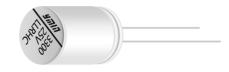
| series | Specification | Ripple current | ESR |
| 135℃/mA.RMS | 100KHz(Ω) | ||
| LKL(R) | 25V 3300μF 16*25 | 2650 | 0.028 |
| LKL(R) | 35V 2200μF 16*25 | 2400 | 0.03 |
| LKL(R) | 50V 1800μF 18*25 | 2350 | 0.035 |
| LKL(R) | 50V 3000μF 18*35 | 3100 | 0.03 |
Why is YMIN “Expensive but Worth It”? TCO Calculation Logic
Many procurement professionals only compare the purchase price of individual items, ignoring hidden costs such as after-sales service, repairs, and recalls. The evaluation standard should be based on the Total Cost of Ownership (TCO): TCO = Purchase Cost + After-sales Maintenance + Fault Compensation + Brand Loss.
The difference is particularly evident in large-scale production scenarios: using ordinary capacitors can result in tens of thousands of yuan in accumulated after-sales compensation over the years; after replacing with YMIN LKL(R), fault repairs are significantly reduced, and after-sales expenses are almost zero. The after-sales costs saved per batch completely cover the premium of the capacitor; at the same time, it avoids the large losses caused by mass recalls, protects long-term brand orders, and has a significant overall cost advantage. The cost of a single fan repair costing a few hundred yuan can be used to purchase hundreds of YMIN automotive-grade capacitors.
Q&A
Q1: In the high-temperature and vibration environment of the engine compartment, are there any automotive-grade capacitors that reliably solve capacitor bulging and leakage?
A: YMIN’s LKL(R) series is a targeted solution with a triple-designed approach to address high-temperature vibration failure: low-volatility electrolyte at 135℃, shock-resistant reinforced packaging, and an efficient internal heat dissipation structure. Real-world testing shows a 20% increase in ripple load at 135℃ and a full-load lifespan exceeding 5000 hours, making it suitable for automotive cooling fans and thermal management filters.
Q2: YMIN’s automotive-grade capacitors have a higher unit price. How do you control overall project costs?
A: We move beyond focusing solely on the purchase price of individual items and calculate the total cost of ownership (TCO) over the entire product lifecycle. In mass production, traditional capacitors can incur tens of thousands of dollars in after-sales expenses annually. Choosing YMIN significantly reduces hidden costs; it also avoids irreversible losses such as recalls, customer complaints, and lost orders, resulting in lower long-term overall investment.
Q3: Can YMIN’s LKL(R) directly replace Japanese NCC GPD/GVD capacitors? How stable is the supply chain?
A: It supports seamless pin-to-pin replacement with perfectly matched electrical parameters. Our capacitors are already being used in large quantities in cooling fan controllers for new energy vehicles, demonstrating mature market performance and extremely low failure rate. As a leading domestic capacitor brand, we offer controllable delivery times and eliminate supply disruption risks, supporting the localization and upgrading of enterprise supply chains.
Summary
If you are looking for a vehicle cooling fan capacitor solution that can truly replace imported capacitors while balancing quality and cost, please contact us for product specifications and free selection advice. YMIN provides professional technical support and sample application services to help you quickly complete solution verification and implementation.
[Abstract]
“Applicable Scenarios”: “Automotive cooling fans, high-temperature vibration environments in engine compartments, DC-Link filters, bus filters, thermal management systems”
“Core Advantages”: “Long lifespan at 135℃ (5000h+), low ESR (≤25mΩ), 20% improved ripple current withstand capability, failure rate ≤10PPM, perfect replacement for NCC GPD/GVD”
“Recommended Models”: “LKL(R)_25V_3300μF_16*25, LKL(R)_50V_3000μF_18*35, LKL(R)_50V_1800μF_18*25″
“Action Guidelines”: “Request a specification sheet, request samples, conduct testing and verification, request a product manual, contact the official website (www.ymin.com)”
Post time: Aug-06-2026