Drone Brushless Electronic Speed Controller (ESC)
Selecting DC-link input capacitors for drone brushless ESCs requires looking beyond just capacitance.
In brushless ESCs used for drones and RC aircraft, DC-link input capacitors are responsible for filtering, stabilizing the bus voltage, and absorbing high-magnitude transient currents. As demands for longer flight times, greater stability, and higher load capacities increase, brushless ESCs must simultaneously meet requirements for compact size, efficient heat dissipation, high overcurrent capability, interference resistance, and versatility across various operating scenarios. Issues such as excessive heat generation, insufficient overload capacity, or bulky dimensions can increase overall energy consumption, reduce flight endurance, and compromise both maintenance and system reliability.
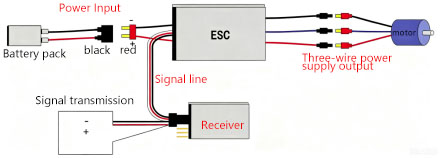
Balancing heat generation and overload capability becomes more challenging as capacitors are miniaturized
When the size of an electrolytic capacitor is reduced, its current-handling capacity may diminish, and its ESR (Equivalent Series Resistance) tends to increase. During system operation, this leads to increased heat generation and energy consumption, potentially shortening the device’s runtime. Conventional liquid electrolytic capacitors may also face issues such as leakage and accelerated performance degradation in high-temperature environments.
YMIN’s VHT series of hybrid (solid-liquid) aluminum electrolytic capacitors is designed for DC-link applications, offering a range of solutions with 80V ratings, various capacitance values, and vibration-resistant specifications. The core design philosophy goes beyond simply stacking parameters; instead, it achieves an optimal balance among filtering performance, buffering capabilities, space efficiency, high-temperature reliability, low ESR, and high ripple current handling—all within a compact form factor.
Technical Approach: From Materials and Parameters to System-Level Performance
The VHT hybrid capacitor series utilizes a specialized solid electrolyte combined with custom anode foil materials. Compared to conventional liquid aluminum electrolytic capacitors, the VHT series offers an ESR reduction of over 60% and doubles the ripple current handling capacity, while achieving a volume reduction of more than 20% for the same capacitance.
Lower ESR translates to reduced capacitor losses and less heat generation; high ripple current handling capacity effectively manages current fluctuations on the input DC bus; and the compact size—relative to capacitance—frees up space for the design of compact brushless electronic speed controllers (ESCs). Adopting the VHT series allows for a 20% reduction in the overall system volume while boosting overload capability by over 20% (to 1.2 times the baseline).
Recommended Models: YMIN VHT Hybrid Capacitor Series
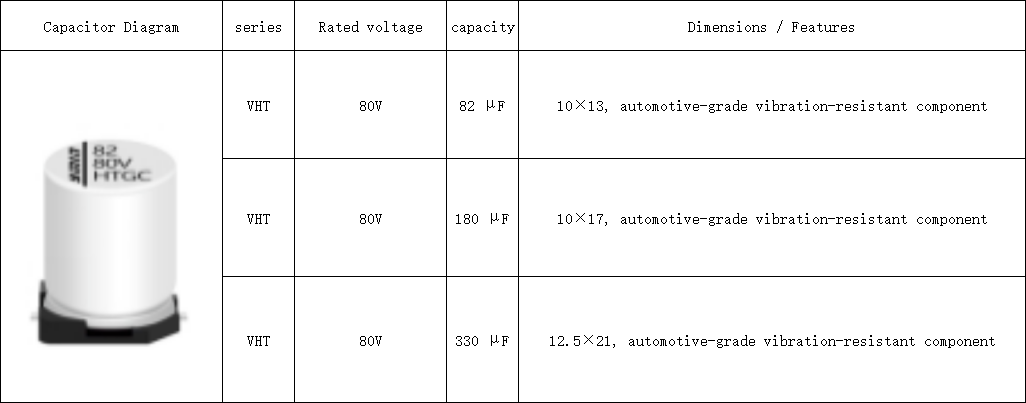
Note: Products of the same series with different capacitance ratings can be used in combination to simultaneously meet filtering and buffering requirements. Specific quantities and configurations should be determined based on the actual DC bus voltage, ripple current, load profile, temperature, installation space, and validation results of the brushless electronic speed controller (ESC).
Q&A
After switching to the YMIN VHT series, the system’s heat generation decreased by approximately 30%, and flight endurance increased by 15%. Following a 4,000-hour high-temperature (125°C) full-load aging test, the capacitance degradation rate met automotive-grade standards. These figures apply to specific application scenarios and test conditions; actual implementation should be verified based on the customer’s specific operating conditions.
For the customer, reduced heat generation alleviates thermal management demands, while increased endurance translates directly into longer usable flight time. The lifespan performance under high-temperature, full-load conditions helps mitigate the impact of capacitor degradation on overall system reliability and long-term maintenance needs.
Cost-Value Analysis Over the Full Lifecycle
YMIN’s solid-liquid hybrid capacitors may not offer the lowest unit purchase price, but the purchase price is only one component of the Total Cost of Ownership (TCO). For drone brushless ESCs, factors such as capacitor heat generation, overload capacity, and high-temperature degradation impact overall energy consumption, flight endurance, maintenance/replacement needs, and the risk of factory returns. The VHT series provides a more stable component foundation through low ESR, high ripple current handling capability, compact size, and robust performance in 125°C full-load aging tests.
Its value lies in reducing the burden of factory returns and subsequent maintenance caused by capacitor issues, thereby lowering the total lifecycle cost.
Customer Q&A
Q1: Why do drone brushless ESCs require capacitors with low ESR and high ripple current tolerance?
A: Input DC bus capacitors are required to filter noise, stabilize the bus voltage, and absorb high instantaneous currents. High ESR can increase capacitor heat generation and overall system energy consumption, while insufficient ripple current handling capability hinders the system’s ability to manage current fluctuations during ESC operation. Data shows that the VHT series offers ESR values more than 60% lower than conventional liquid electrolytic capacitors and doubles the ripple current handling capability. Q2: What specifications are available in the VHT series for space-constrained applications?
A: The VHT series includes 80V 82μF (10×13), 80V 180μF (10×17), and 80V 330μF (12.5×21) options, all featuring “CG” vibration-resistant specifications. Compared to standard liquid electrolytic capacitors of the same capacitance, this series offers a volume reduction of over 20%. Designers can select combinations of different capacitance values from the same series to meet specific filtering and buffering requirements.
Q3: YMIN capacitors are not the cheapest option; why are they still worth considering?
A: The total cost of a drone encompasses more than just the capacitor purchase price; it includes hidden costs associated with energy consumption, maintenance, replacement, and factory returns. The VHT series is engineered to mitigate system-level risks—such as heat generation, performance degradation, and insufficient overload capability—at the component level, thereby reducing the burden of future maintenance and returns.
Summary
The YMIN VHT series of hybrid aluminum electrolytic capacitors offers a balanced combination of low ESR, high ripple current tolerance, compact size, high-temperature reliability, and vibration resistance. These capacitors help drone brushless ESCs (Electronic Speed Controllers) reduce heat generation and energy consumption, improve overload capability, and minimize risks related to maintenance, replacement, and factory returns caused by capacitor performance degradation.
To learn more about these products, please contact YMIN. We provide samples, datasheets, and technical selection support for the VHT series. We can assist with solution validation based on your project’s specific requirements, including bus voltage, capacitance, ripple current, load, temperature, mounting space, and vibration resistance. [Summary]
“Applications”: “Input bus filtering and buffering for brushless electronic speed controllers (ESCs) in drones and RC aircraft”,
“Key Advantages”: “Low ESR, high ripple current capability, compact size, and 4,000-hour lifespan at 125°C under full load”,
“Recommended Models”: “VHT 80V 82μF 10×13 (Vibration-resistant); VHT 80V 180μF 10×17 (Vibration-resistant); VHT 80V 330μF 12.5×21 (Vibration-resistant)”,
“Next Steps”: “Get datasheet, request samples, get selection advice, verify selection”
Post time: Aug-14-2026