AI server racks experience millisecond-level (typically 1–50 ms) power surges and DC bus voltage drops during rapid switching between training and inference loads. NVIDIA, in its GB300 NVL72 power rack design, mentions that its power rack integrates energy storage components and works with a controller to achieve rack-level rapid transient power smoothing (see reference [1]).
In engineering practice, using a “hybrid supercapacitor (LIC) + BBU (Battery Backup Unit)” to form a nearby buffer layer can decouple “transient response” and “short-term backup power”: the LIC is responsible for millisecond-level compensation, and the BBU is responsible for second- to minute-level takeover. This article provides a reproducible selection approach for engineers, a list of key indicators, and verification items. Taking the YMIN SLF 4.0V 4500F (single-unit ESR≤0.8mΩ, continuous discharge current 200A, parameters should refer to the specification sheet [3]) as an example, it provides configuration suggestions and comparative data support.
Rack BBU power supplies are moving “transient power smoothing” closer to the load.
As single-rack power consumption reaches the hundreds of kilowatts level, AI workloads can cause current spikes in a short time. If the bus voltage drop exceeds the system threshold, it may trigger motherboard protection, GPU errors, or restarts. To reduce peak impacts on upstream power supply and the grid, some architectures are introducing energy buffering and control strategies within the rack power rack, allowing power spikes to be “absorbed and released locally” within the rack. The core message of this design is: transient problems should be addressed first at the location closest to the load.
In servers equipped with ultra-high-power (kilowatt-level) GPUs such as NVIDIA GB200/GB300, the core challenge facing power systems has shifted from traditional backup power to handling transient power surges at the millisecond and hundreds of kilowatt levels. Traditional BBU backup power solutions, centered on lead-acid batteries, suffer from bottlenecks in response speed and power density due to inherent chemical reaction delays, high internal resistance, and limited dynamic charge acceptance capabilities. These bottlenecks have become key factors restricting the improvement of single-rack computing power and system reliability.
Table 1: Schematic diagram of the location of the three-level hybrid energy storage mode in the rack BBU (table diagram)
| Load Side | DC Bus | LIC (Hybrid Super Capacitor) | BBU (Battery/Energy Storage) | UPS/HVDC |
| GPU/Motherboard Power Step (ms Level) | DC Bus Voltage Voltage Drop/Ripple | Local Compensation Typical 1-50 ms High-rate Charge/Discharge | Short-term Takeover Second-Minute Level (Designed According to System) | Long-term Power Supply Minute-Hour Level (According to Data Center Architecture) |
Architecture Evolution
From “Battery Backup” to “Three-Tier Hybrid Energy Storage Mode”
Traditional BBUs primarily rely on batteries for energy storage. Faced with millisecond-level power shortages, batteries, limited by chemical reaction kinetics and equivalent internal resistance, often respond less swiftly than capacitor-based energy storage. Therefore, rack-side solutions have begun to adopt a tiered strategy: “LIC (transient) + BBU (short-time) + UPS/HVDC (long-time)”:
LIC connected in parallel near the DC Bus: handles millisecond-level power compensation and voltage support (high-rate charging and discharging).
BBU (battery or other energy storage): handles second- to minute-level takeover (system designed for backup duration).
Data center-level UPS/HVDC: handles longer-term uninterrupted power supply and grid-side regulation.
This division of labor decouples “fast variables” and “slow variables”: stabilizing the bus while reducing long-term stress and maintenance pressure on energy storage units.
In-depth Analysis: Why YMIN Hybrid Supercapacitors?
ymin’s hybrid supercapacitor LIC (Lithium-ion Capacitor) structurally combines the high power characteristics of capacitors with the high energy density of an electrochemical system. In transient compensation scenarios, the key to withstanding the load is: outputting the required energy within the target Δt, and delivering a sufficiently large pulse current within the allowable temperature rise and voltage drop range.
High Power Output: When GPU load changes abruptly or the power grid fluctuates, traditional lead-acid batteries, due to their slow chemical reaction rate and high internal resistance, experience a rapid deterioration in their dynamic charge acceptance capability, resulting in an inability to respond in milliseconds. The hybrid supercapacitor can complete instantaneous compensation within 1-50ms, followed by minute-level backup power from the BBU backup power supply, ensuring stable bus voltage and significantly reducing the risk of motherboard and GPU crashes.
Volume and Weight Optimization: When comparing “equivalent available energy (determined by the V_hi→V_lo voltage window) + equivalent transient window (Δt),” the LIC buffer layer solution typically reduces volume and weight significantly compared to traditional battery backup (volume reduction of approximately 50%–70%, weight reduction of approximately 50%–60%, typical values are not publicly available and require project verification), freeing up rack space and airflow resources. (The specific percentage depends on the specifications, structural components, and heat dissipation solutions of the comparison object; project-specific verification is recommended.)
Charging Speed Improvement: LIC possesses high-rate charge and discharge capabilities, and its recharge speed is typically higher than that of battery solutions (speed improvement of more than 5 times, achieving near-ten-minute fast charging; source: hybrid supercapacitor versus typical lead-acid battery values). Recharge time is determined by system power margin, charging strategy, and thermal design. It is recommended to use “time required to recharge to V_hi” as an acceptance metric, combined with repeated pulse temperature rise evaluation.
Long cycle life: LIC typically exhibits longer cycle life and lower maintenance requirements under high-frequency charge and discharge conditions (1 million cycles, over 6 years of lifespan, approximately 200 times that of traditional lead-acid batteries; source: Hybrid supercapacitors compared to typical lead-acid batteries). Cycle life and temperature rise limits are subject to specific specifications and test conditions. From a full lifecycle perspective, this helps reduce operation and maintenance and failure costs.
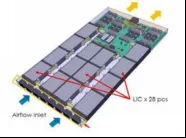
Figure 2: Hybrid Energy Storage System Schematic:
Lithium-ion Battery (second-minute level) + Lithium-ion Capacitor LIC (millisecond-level buffer)
Based on the NVIDIA GB300 reference design’s Japanese Musashi CCP3300SC (3.8V 3000F), it boasts higher capacity density, higher voltage, and higher capacity in its publicly available specifications: a 4.0V operating voltage and a 4500F capacity, resulting in higher single-cell energy storage and stronger buffering capabilities within the same module size, ensuring uncompromised millisecond-level response.
Key parameters of YMIN SLF series hybrid supercapacitors:
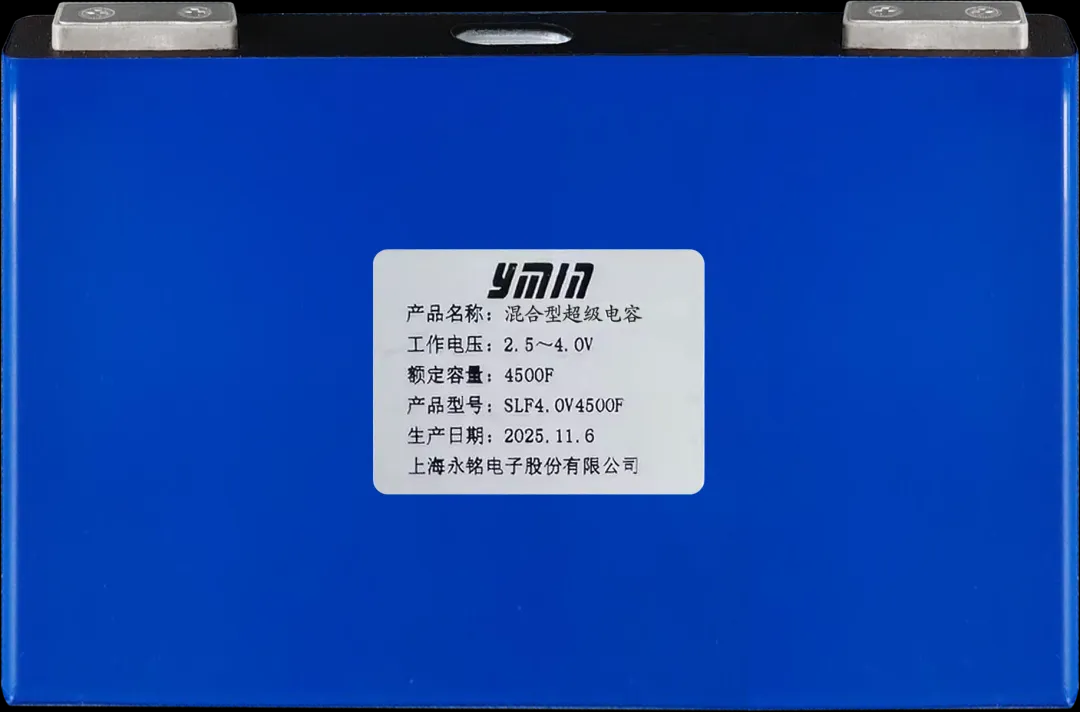
Rated Voltage: 4.0V; Nominal Capacity: 4500F
DC Internal Resistance/ESR: ≤0.8mΩ
Continuous Discharge Current: 200A
Operating Voltage Range: 4.0–2.5V
Utilizing YMIN’s hybrid supercapacitor-based BBU local buffer solution, it can provide high current compensation to the DC bus within a millisecond window, improving bus voltage stability. Compared to other solutions with the same available energy and transient window, the buffer layer typically reduces space occupation and frees up rack resources. It is also more suitable for high-frequency charging and discharging and rapid recovery requirements, reducing maintenance pressure. Specific performance should be verified based on project specifications.
Selection Guide: Precise Matching to Scenario
Facing the extreme challenges of AI computing power, innovation in power supply systems is crucial. YMIN’s SLF 4.0V 4500F hybrid supercapacitor, with its solid proprietary technology, provides a high-performance, highly reliable domestically produced BBU buffer layer solution, providing core support for the stable, efficient, and intensive continuous evolution of AI data centers.
If you require detailed technical information, we can provide: datasheets, test data, application selection tables, samples, etc. Please also provide key information such as: bus voltage, ΔP/Δt, space dimensions, ambient temperature, and lifespan specifications so we can quickly provide configuration recommendations.
Q&A Section
Q: The GPU load of an AI server can surge by 150% within milliseconds, and traditional lead-acid batteries cannot keep up. What is the specific response time of YMIN lithium-ion supercapacitors, and how do you achieve this rapid support?
A: YMIN hybrid supercapacitors (SLF 4.0V 4500F) rely on physical energy storage principles and have extremely low internal resistance (≤0.8mΩ), enabling instantaneous high-rate discharge in the 1-50 millisecond range. When a sudden change in GPU load causes a sharp drop in DC bus voltage, it can release a large current with almost no delay, directly compensating the bus power, thus buying time for the backend BBU power supply to wake up and take over, ensuring a smooth voltage transition and avoiding computational errors or hardware crashes caused by voltage drops.
Summary at the end of this article
Applicable Scenarios: Suitable for AI server rack-level BBUs (Backup Power Units) in scenarios where the DC bus faces millisecond-level transient power surges/voltage drops; applicable to a “hybrid supercapacitor + BBU” local buffer architecture for bus voltage stabilization and transient compensation under short-term power outages, grid fluctuations, and sudden GPU load changes.
Core Advantages: Millisecond-level fast response (compensating for 1-50ms transient windows); low internal resistance/high current capability, improving bus voltage stability and reducing the risk of unexpected restarts; supports high-rate charging and discharging and fast recharge, shortening backup power recovery time; more suitable for high-frequency charging and discharging conditions compared to traditional battery solutions, helping to reduce maintenance pressure and total lifecycle costs.
Recommended Model: YMIN Square Hybrid Supercapacitor SLF 4.0V 4500F
Data (Specifications/Test Reports/Samples) Acquisition:
Official Website: www.ymin.com
Technical Hotline: 021-33617848
References (Public Sources)
[1] NVIDIA Official Public Information/Technical Blog: Introduction to GB300 NVL72 (Power Shelf) Rack-Level Transient Smoothing/Energy Storage
[2] Public Reports from Media/Institutions such as TrendForce: GB200/GB300 Related LIC Applications and Supply Chain Information
[3] Shanghai YMIN Electronics provides the “SLF 4.0V 4500F Hybrid Supercapacitor Specifications”

Post time: Jan-20-2026