I. Low Power Consumption Has Evolved from an “Optimization Target” to an “Entry Barrier”
In the design of automotive DC-DC converters, engineers often focus on switching losses and magnetic component losses, but easily overlook a hidden yet fatal problem:
In the output filter circuit of an automotive DC-DC converter, when multiple electrolytic capacitors are connected in parallel, the leakage current (LC) of each capacitor in the μA range will linearly add up.
While seemingly insignificant at room temperature, once subjected to high-temperature reflow soldering, the capacitor leakage current will drift significantly and even rebound irreversibly, ultimately pushing the overall static power consumption beyond the red line.
Currently, vehicle energy efficiency has become a mandatory entry barrier for OEMs. Exceeding the standby power consumption standard of a DC-DC converter means that the entire project may fail the stringent energy efficiency certification. A single instance of exceeding the power consumption standard can lead to project delays, wasted hundreds of thousands of dollars in overall energy efficiency testing fees, or even millions of dollars in recall losses.
This is not just a minor issue of parameter drift; it represents a triple loss of time, capital, and brand value.
II. From Japanese Preferred to Domestic Preferred: YMIN’s High Reliability and Quantifiable TCO Advantages
Japanese capacitors offer stable performance, but come with long lead times, high prices, and risks associated with relying on a single source. More importantly, under high-temperature reflow soldering and prolonged high-temperature conditions, the leakage current of some Japanese capacitors can drift—not all Japanese solutions can withstand the extreme conditions of DC-DC converters. With the advancement of domestic production, end customers are expanding their domestic supply chain channels to validate domestic alternatives. As a fully domestically produced brand, YMIN achieves the following while maintaining performance levels equivalent to Japanese capacitors:
· Reduced procurement costs by 15%~25% compared to imports
· Reduced supply chain risks: Dual source guarantees, avoiding reliance on a single source
· Lower after-sales failure rate: Long-term stable measured leakage current without rebound
Customers need more than just a component; they need a highly reliable, cost-effective domestic solution that can withstand process shocks, endure prolonged high temperatures, and has controllable leakage current throughout its entire lifecycle. III. How do VHU solid-liquid hybrid capacitors solve power consumption challenges?
YMIN’s VHU series of solid-liquid hybrid aluminum electrolytic capacitors optimizes leakage current performance from the source, achieving lower and controllable system power consumption while ensuring stability, helping customers reduce power consumption risks in DC-DC designs.
Based on nanoscale dielectric layer aluminum foil technology, the VHU series significantly reduces LC levels while ensuring capacitor performance stability after high-temperature reflow soldering, avoiding leakage current rebound issues caused by process shocks. Taking the flagship model VHU 35V 270μF (10×10.5mm) as an example, the standard leakage current is 94.5μA, which can be stably controlled at approximately 30μA in actual applications, and remains at ≤60μA after reflow soldering, providing reliable support for low-power system designs.
Actual performance curves show:
• Verified by a 4000-hour high-temperature load test, the VHU series exhibits excellent performance in both capacity retention and ESR stability, ensuring no leakage current rebound under long-term use.
• The VHU series maintains excellent leakage current control capabilities across the entire temperature range of -55℃ to +135℃.
• The parameters of the VHU series remain highly consistent under high-temperature and long-term operating conditions.

[Figure 1: VHU series 4000-hour high-temperature load test curve]

[Figure 2: VHU series wide temperature adaptability test curves]
In practical DC-DC applications, the VHU series not only achieves lower initial power consumption but also maintains stability during long-term operation. Customers are not just buying a capacitor, but a DC-DC solution with “low risk, low return rate, and high yield”.
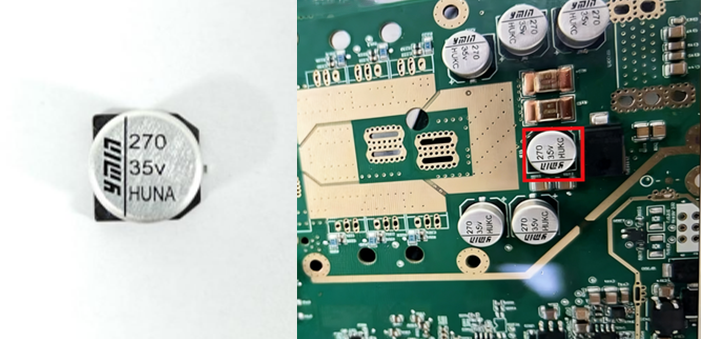
[Figure 3: Application Case of DC-DC / 5.0 DMI DC-DC on a Certain Automotive 3.0 EV Platform]
IV. Why are YMIN capacitors worth the price?
Purchasing and management often say, “Among domestic capacitors, YMIN is simply more expensive than others.”
YMIN’s comparison is never about the lowest price among domestic brands. We anchor ourselves to the performance baseline of Japanese capacitors while offering a more advantageous Total Cost of Ownership (TCO). Compared to “focusing solely on the purchase price,” more and more DC-DC customers are starting to pay attention to:
Long-term system reliability, operational stability, subsequent maintenance costs, and the long-term operational benefits of the entire vehicle.
YMIN’s VHU series solid-liquid hybrid capacitors, while not the lowest-priced solution, help customers avoid:
* Hundreds of thousands of dollars in losses from a single failed system power consumption test
* Missed market opportunities due to project delays
* High after-sales costs from returning the entire system to the factory
* Vehicle battery drain and starting difficulties caused by increased leakage current
* Hidden expenses for repeated debugging, labor, and equipment
* Long-term order risks due to a collapse in brand trust.
The truly expensive part is never a single capacitor, but the “hidden bill”: the costs of system power consumption testing, returns to the factory, after-sales claims, and project delays.
What other support can YMIN offer?
PIN-to-PIN Compatibility: The VHU series is compatible with traditional brand sizes and pin definitions, allowing for direct replacement without board modifications.
Engineering Support: We provide technical support such as leakage current measurement data, high-temperature reflow soldering verification reports, and waveform comparisons to help customers quickly verify their systems.
Secondary Supplier Guarantee: We help customers break free from reliance on a single supplier, improving supply chain security and meeting OEMs’ requirements for backup suppliers.
Long-Term Supply Commitment: Automotive-grade product lifecycle management to meet OEMs’ long-term supply needs for 5-10 years.
V. YMIN is not just a capacitor supplier, but also a partner for highly reliable automotive DC-DC solutions.
With the VHU series solid-liquid hybrid capacitors, YMIN helps customers upgrade from “reliance on a single Japanese capacitor” to “stable compliance with margins,” avoiding potential losses ranging from hundreds of thousands to millions of yuan.
What’s truly expensive is never the purchase price of the capacitor itself.
It’s: project delays, failed overall system power consumption tests, after-sales claims, and the collapse of brand trust.
YMIN chooses to help you reduce these hidden costs.
For VHU series datasheets or sample requests, please contact the YMIN technical team at (www.ymin.com).
VI. Frequently Asked Questions
Q1: The standby power consumption of the capacitors connected in parallel on our DC-DC converters consistently exceeds the limit. Is there a solution?
A1: Some capacitors perform fine at room temperature, but during high-temperature reflow soldering (approximately 260℃), internal thermal stress occurs, causing micro-cracks in the dielectric layer. These cracks become apparent after reflow soldering. YMIN’s VHU series solid-liquid hybrid capacitors utilize nano-level dielectric layer aluminum foil technology, resulting in a denser and more uniform dielectric layer. Actual measurements show that the leakage current stabilizes at ≤60μA after reflow soldering, and it has passed 4000 hours of high-temperature load verification without any rebound.
Q2: YMIN’s VHU series capacitors are slightly more expensive than our previous capacitors. Is it worth it?
A2: The capacitors are a few cents more expensive, and the entire board is a few dollars more expensive, but it can save you hundreds of thousands in certification retesting fees and millions in recall risks. It’s a worthwhile investment.
For example, a complete automotive-grade DV/PV certification costs tens to hundreds of thousands of yuan. If standby power consumption exceeds the limit due to capacitor leakage current, certification fails and retesting is required, rendering this money wasted. Even worse, if problems arise in large quantities after installation, a small recall can cost millions of yuan, damaging the brand’s reputation. YMIN VHU allows you to pass energy efficiency certification on the first try, with stable leakage current throughout its lifecycle and extremely low recall risk. Therefore, don’t just look at the unit price of the capacitor; calculate the total cost.
Q3: We are currently using capacitors from an imported brand and would like to try YMIN VHU. Can they be directly replaced? Is board modification necessary?
A3: They can be directly replaced pin-to-pin without board modification. The VHU series 35V 270μF (10×10.5mm) is fully compatible with mainstream imported brands in terms of size and pin definitions. YMIN can also provide leakage current measurement data, reflow soldering verification reports, and other technical support to help you quickly verify your specifications.
[Abstract]
“Applicable Scenarios”: “Automotive DC-DC converters, new energy vehicles”
“Core Advantages”: “Ultra-low leakage current (actual ≈30μA), nano-level dielectric layer aluminum foil technology, high-temperature reflow soldering resistant (≤60μA), stable across the entire temperature range (-55~135℃), AEC-Q200 certified, PIN-to-PIN replacement”
“Recommended Model”: “VHU 35V 270μF (10×10.5mm)”
Post time: May-30-2026